
Social impact assessment: all 10 innovations provide returns that justify the investment
The projected 1-year benefit-cost ratio (B/C Ratio) assessment of all 10 top innovations found a B/C value above 1 for every innovation.
Translated from Thai · reviewed by the CF team
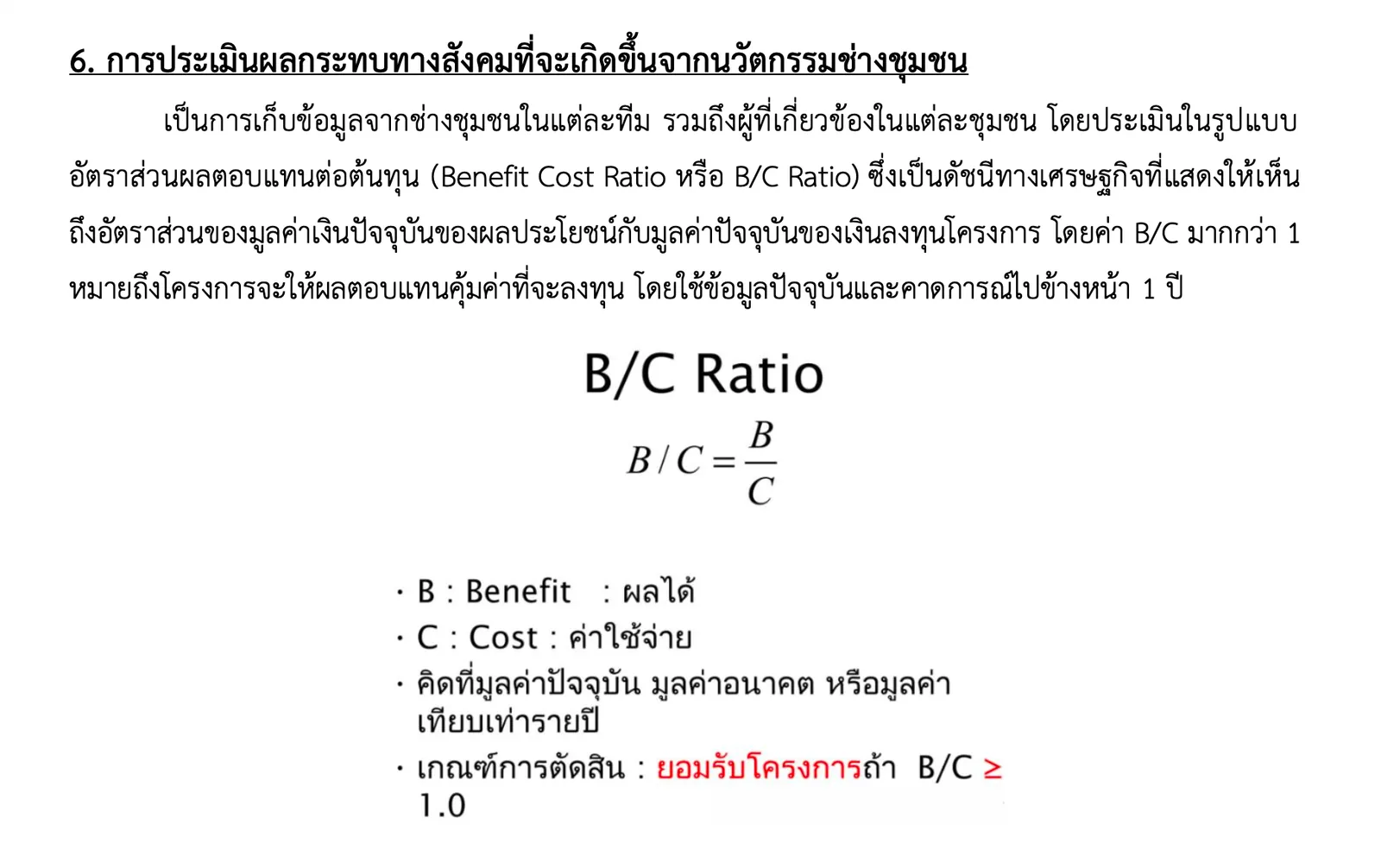
The Project assessed the social impact expected from all 10 top Grassroots Innovators innovations using the Benefit-Cost Ratio (B/C Ratio), projecting returns over 1 year against current costs. The assessment found that every innovation had a B/C value above 1, meaning each offered returns that justified investment according to the Project’s decision criteria.
Examples of the B/C values calculated include: a gas stove using charcoal scraps in Buriram Province = 1.5 (from reduced cooking energy costs); an innovation that converts fishing boats into eco-friendly sailboats in Trat Province = 30 (from a reduction of up to 50% in fishing boat fuel costs per trip); “Cut Nails, Build Homes” in Phetchabun Province = 2; a coffee roaster made from scrap metal in Chiang Rai Province = 1.75; an elephant-outside-the-forest-boundary warning device in Nakhon Ratchasima Province = 16.67; an automatic smoke-detection sprinkler firebreak in Lamphun Province = 66.67 (the highest, based on the value of wildfire damage prevented compared with the prototype equipment cost of 5,000 baht per set); Geo Art in Nakhon Ratchasima Province = 2.38; furniture made from palmyra palm stems and leaf sheaths in Phetchaburi Province = 3; artificial leather products made from cocoa pod husks in Sa Kaeo Province = 2.5; and fabric dyed with khai nun and hand-embroidered with floral patterns in Kalasin Province = 1.5.
These figures are the Project team’s own internal assessment, intended to support decisions on selecting projects for scale-up funding. They have not been verified by an independent external organisation.