
Setting up a community-based fisheries data monitoring system and collecting baseline data before management begins
TSWA trained fisheries volunteers in 15 communities to collect data on species, quantities and weights of aquatic animals. Baseline data collection began in April–May 2025.
Translated from Thai · reviewed by the CF team
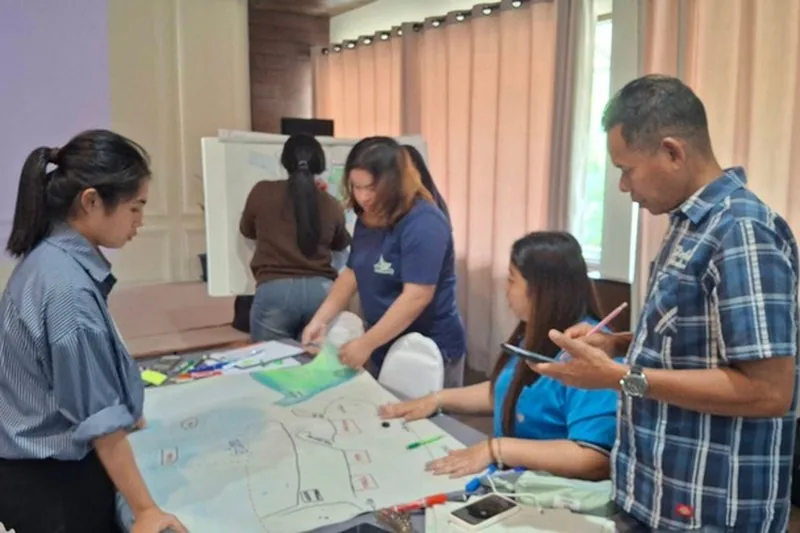
In April 2025, TSWA began setting up a community-based fisheries data monitoring system in 15 pilot communities, training fisheries volunteers and field officers to record fisheries indicators such as the weight of aquatic animals caught, target species and bycatch species, and reproductive indicators such as egg maturity. Each community selected 2-3 key species for long-term monitoring, with fisheries volunteers collecting samples every month, with at least 3 people per species.
Baseline data was collected in April–May 2025 before management measures were fully implemented, for comparison with follow-up data to be collected again in September–October of the same year. The science team also continued to support the collection of seawater samples for eDNA and plankton analysis in some areas, to obtain more detailed biodiversity data than fisheries catch surveys alone can provide.