
Department of Marine and Coastal Resources adopts 19 LMMA assessment criteria for development into a national standard
The 19 LMMA assessment criteria developed by TSWA from field experience have been endorsed by the Department of Marine and Coastal Resources as a basis for developing a national LMMA certification standard.
Translated from Thai · reviewed by the CF team
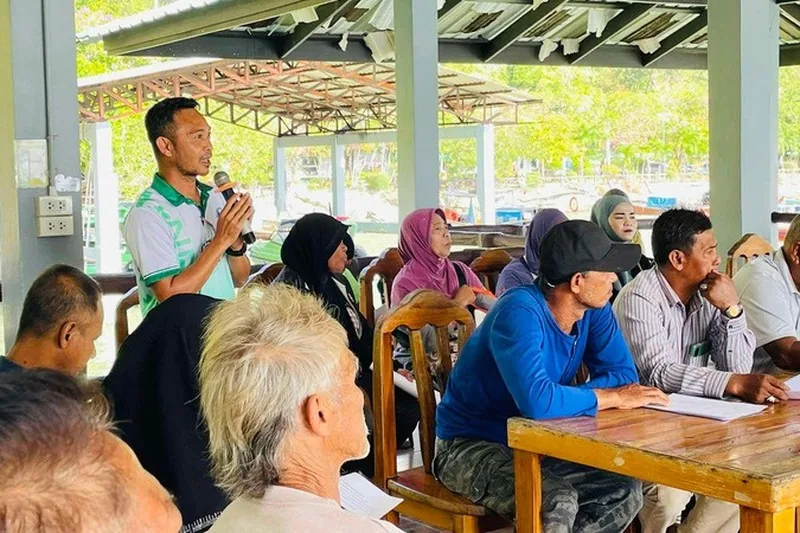
Although the concept of locally managed marine areas (LMMAs) is not new in Thailand, before the Sea Guardians Project there were no clear guidelines for communities to use to organise themselves and track progress. TSWA therefore developed a framework of 19 assessment criteria, divided into 7 mandatory criteria (such as establishing a small-scale fisheries community group, having conservation measures and baseline resource data, clearly defining LMMA boundaries, establishing a management committee, and monitoring changes in resources) and 12 supplementary criteria (such as participation by all groups in the community, developing a resource-based economy in line with the BCG economy concept, establishing a conservation fund, and promoting local culture).
Trialling these criteria in practice with 15 communities in diverse contexts produced case studies showing how the LMMA approach can be adapted to different contexts. The Department of Marine and Coastal Resources (DMCR) has therefore adopted this framework as a basis for further developing a national LMMA certification standard. This marks an important step towards community-based marine management receiving formal recognition at the policy level.