
Doi Chang Pa Pae and Mae Pok: Firebreaks built on a village-wide pledge, backed by sensors, cameras and water management systems
The community of Ban Doi Chang Pa Pae in Lamphun Province mobilised every household to build a firebreak more than 30 kilometres long around the forest. They also installed heat and smoke sensors connected to a sprinkler system that volunteers can activate by smartphone from their accommodation, as well as IP cameras used with wind-direction data to forecast a fire’s path 1 hour ahead. Meanwhile, Ban Mae Pok in the same province invested in repairing its upstream water system to support firefighting.
Translated from Thai · reviewed by the CF team
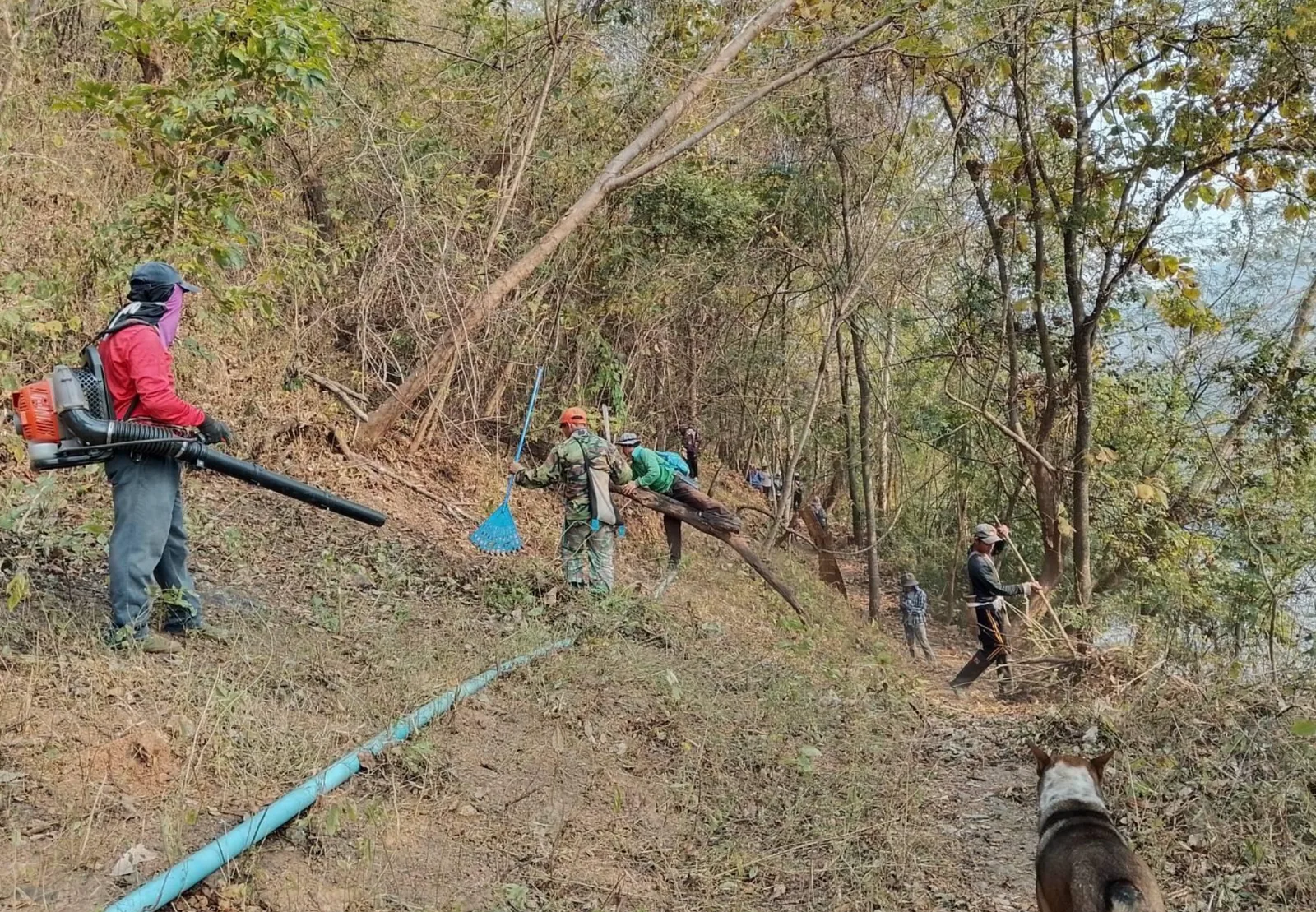
Firebreaks built on everyone’s “pledge”
At Doi Chang Pa Pae village, building a firebreak is not the responsibility of any one group of volunteers. It is a “pledge” that every household in the village shares responsibility for. Villagers worked together to dig a firebreak along a steep mountain ridge, creating a continuous firebreak more than 30 kilometres long to protect the forest. The strength of this kind of community-led defence lies in its ability to mobilise the entire village to form a frontline, without having to wait for delays in government funding, which is often only actually disbursed in the middle of the year.
IoT and personal “artificial rain”
Doi Chang Pa Pae has taken this further by installing heat and smoke detection sensors in high-risk locations, connected to a smart sprinkler system. Volunteers can activate the water-spraying system by smartphone from their accommodation, creating moisture in advance in areas where a fire is about to spread. This system has genuinely helped keep people doing the work safe. In the past, community firebreak teams often faced serious risks just to go and turn on the water in the middle of a fire.
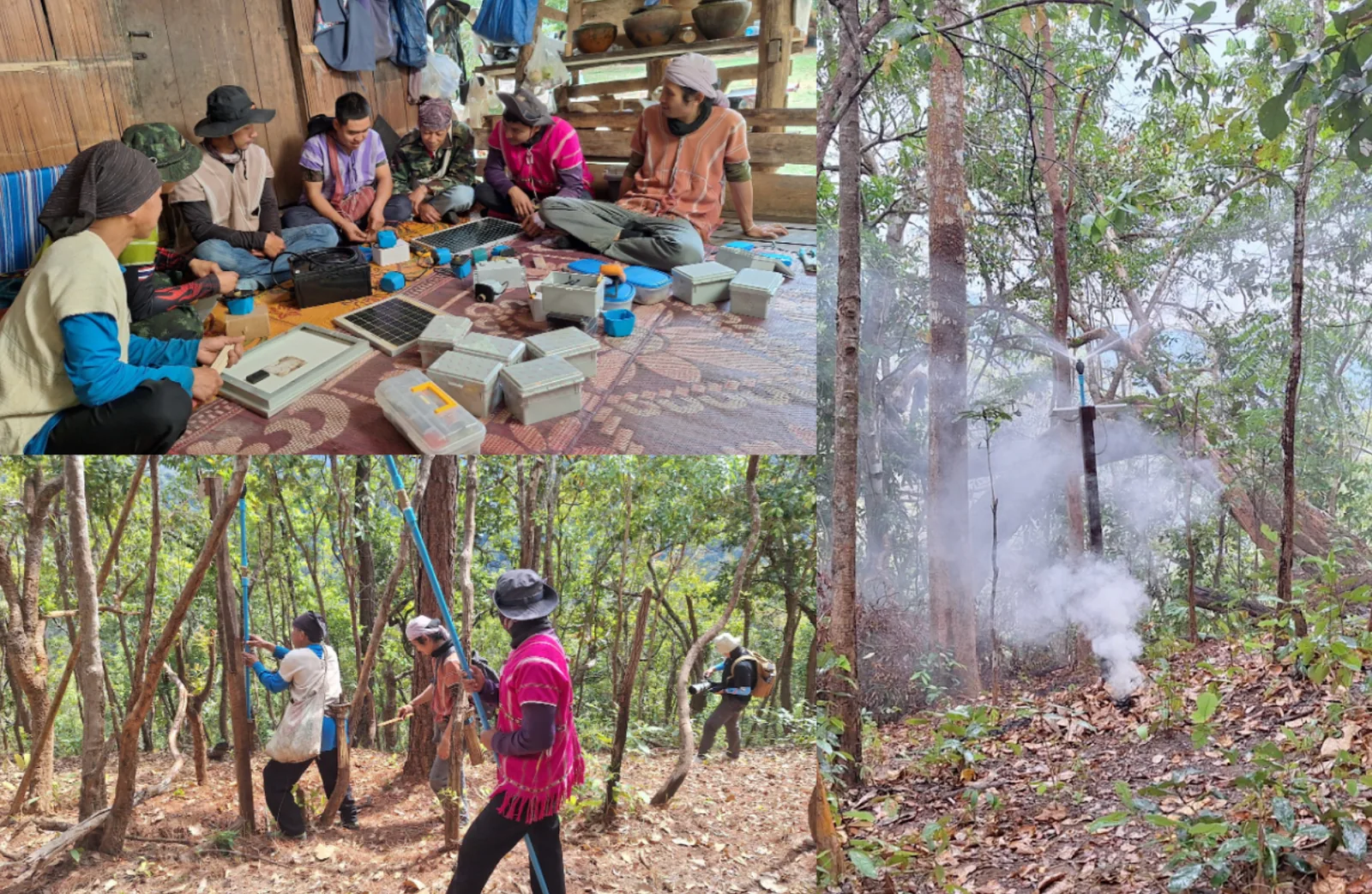
CCTV and high-angle IP cameras have also been installed in the area and connected to the forward operations centre, providing a view of the entire mountain. Camera data is analysed alongside wind direction to forecast and plan where a fire will spread in the next 1 hour, making firefighting plans more scientific than guesswork. A report from the local monitoring team on 7 April 2026 stated that no hotspots had occurred around the village, as confirmed by the IP camera footage, which showed no smoke. Meanwhile, the team continued to monitor the fire lines and make a second round of firebreak inspections across both the Chiang Mai and Lamphun sides.
Mae Pok: Managing the headwaters to support firefighting
In the same province, villagers in Ban Mae Pok are looking beyond putting out fires after they start. They have invested their labour in repairing check dams and maintaining the mountain water-supply pipe system, creating community-led defences focused on retaining moisture in the forest. This helps reduce the severity of fires and ensures water is available to spray and contain fires in high-risk areas throughout the season.