
Designing two pathways into schools: the team delivers 3 days of in-person teaching or trains teachers to teach flexibly
The team assesses each school’s readiness before choosing the most suitable activity format, and sets up a system to advise teachers throughout the activities and a reward system to motivate both teachers and students.
Translated from Thai · reviewed by the CF team
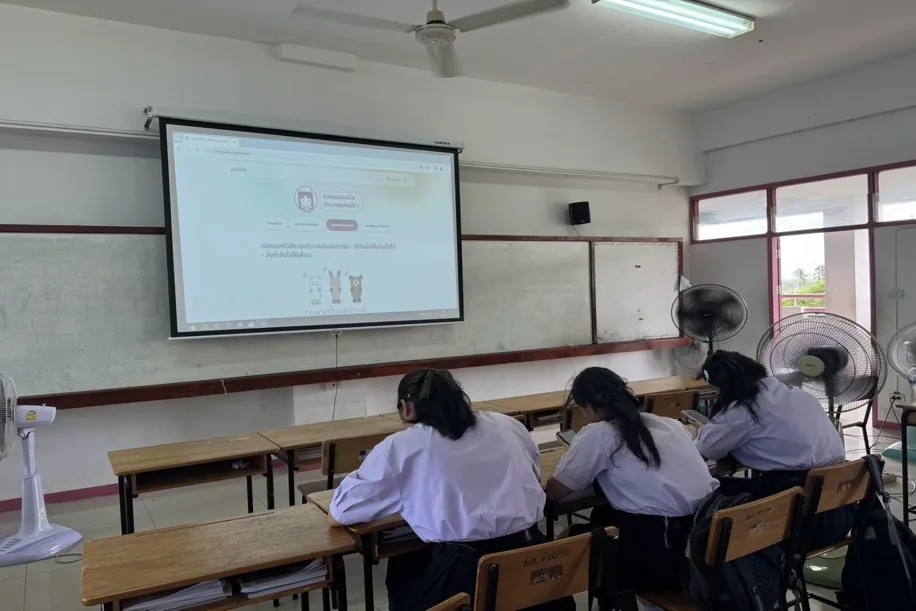
Engagement with each school begins by coordinating with the school director and preparing a permission letter, which is then passed on to teachers in the relevant subject areas. In most cases, guidance counsellors are responsible for running the activities. The team designs teaching content as PowerPoint materials that can be used online, offline or for in-person teaching on site, allowing each school to choose a format suited to its own context.
Most large schools or provincial schools have the necessary equipment and facilities, making them suitable for 3 days of in-person teaching by the team during club periods or grade-level meetings. However, because of time constraints in core subject classes, each session can accommodate only 100-200 students per day, so activities cannot be held for the whole school at once. For medium-sized and small schools, schools offering extended educational opportunities, and remote schools that often lack teachers, equipment and teaching materials, the team chooses to train teachers to understand the activities first, then have them teach the students themselves at a flexible time. The activities can be integrated with other subjects or assigned as homework for students without a mobile phone or internet access to do at home.
Throughout the activities, the team provides teachers with ongoing advice through video calls and messages, both in groups and individually. It also trains replacement teachers when staff transfers occur during the activities, so that learning is not interrupted. Students who participate and complete all the activities receive certificates and prizes. Schools that involve 80-90% of their total students receive plaques of recognition, and teachers who train outside working hours or help extend the activities to other schools receive compensation or support in the form of learning equipment.