
Ban Boe: Khon Khlan upgrades its traditional small-scale fishing boundary to an officially recognised LMMA
Khon Khlan community in Satun Province has had its own rules to protect the sea since 2023. The Sea Guardians Project helped upgrade these into an officially recognised LMMA, with a patrol system staffed by 24 volunteers.
Translated from Thai · reviewed by the CF team
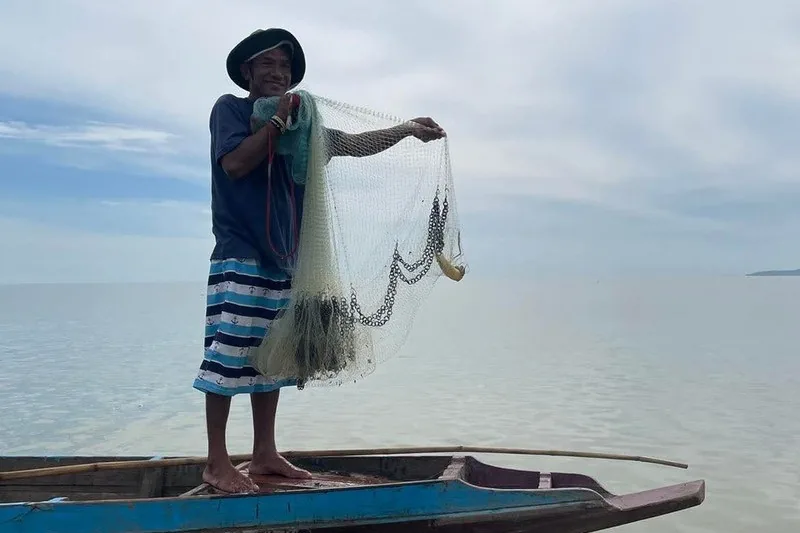
The Khon Khlan community in Satun Province had already marked out the boundaries of its own sea area before the Sea Guardians Project began. Since 2023, the community has designated a conservation zone called "Ban Bo", named after an ancient navigation technique that uses Khao Taban as an alignment marker with Bang Ko headland on the shore. It set 10 rules that local fishers developed together. The three most powerful rules are an absolute ban on trawls and seabed-dragging gear, a minimum mesh size of 2.5 inches to allow juvenile fish to escape, and a ban on catching any aquatic animals other than by hook and line within a 200-metre radius around every fish house. These rules are not imposed from outside; they are a social contract that the community upholds together to secure livelihoods over the long term.
The Sea Guardians Project has strengthened the existing system by formally recognising it as an LMMA, reinforcing patrols by 24 trained volunteer fishers, and establishing a more concrete monitoring system. Since regular patrols began, no violations of the rules have been found in the area under their care. Initial monitoring data also point to positive signs. Whereas the first survey found mainly mackerel (May 2024), monitoring in July–August 2025 found greater diversity, including shrimp, sea catfish, croakers, pufferfish and damselfish. Around the fish houses, groupers, sea bass and mussels are beginning to settle again.
"Young people in the area are taking part in community activities more often. They volunteer to help monitor the conservation area and places where fish shelters have been installed, and help record aquatic species data each month. This data is used to measure environmental changes and plan future management. Young people's participation is extremely valuable in helping build an evidence base and continuously improve our work." — Khon Khlan Community Group committee member